



Imagine a company preparing its quarterly revenue report. An employee asks an AI assistant to organize the transactions, check the figures, and prepare a summary for management. Somewhere along the way, the assistant incorrectly classifies a group of canceled orders as completed sales, which inflates the company’s reported revenue.
The mistake isn’t particularly obvious. The calculations are internally consistent, the tables look reasonable, and the explanation accompanying them sounds perfectly confident.
A second AI reviews the report and confirms that the calculations are correct, which they are, given the categories used in the original analysis. The employee’s manager reads another AI-generated summary, finds nothing concerning, and approves the work. By the time the report reaches a senior executive, every required review has been completed, although nobody has independently examined the assumption responsible for the error.
The company’s revenue figure is wrong, but its approval process appears to have worked exactly as designed.
This is a hypothetical example, although there’s nothing especially futuristic about the organizational instinct behind it. When work becomes more complicated, we generally respond by adding another level of review. AI now allows us to do this with remarkable ease, assigning one system to perform the work, another to evaluate it, and perhaps a third to assess whether the evaluation was sufficient.
Meanwhile, the people overseeing these systems are increasingly using AI to help make their own decisions, which raises an interesting question about what anyone in this arrangement has actually established independently.
The difference between checking and approving
There’s always been a gap between performing work and supervising it. A hospital administrator doesn’t personally interpret every scan, just as a CEO can’t reasonably be expected to reproduce every calculation in a company’s financial statements. Modern organizations depend on specialization, professional standards, and the assumption that people can responsibly oversee work they haven’t performed themselves.
AI complicates that familiar arrangement because it can participate in nearly every part of the process. It can produce an answer, explain how it arrived there, evaluate its own performance, and assess another system’s evaluation. The underlying work and the reassurance about its reliability can arrive together, often expressed in equally polished and persuasive language.
A manager reading that explanation may feel well informed while remaining several steps removed from the evidence that would reveal a mistake. The review becomes an assessment of whether the explanation sounds reasonable, rather than an independent examination of whether the underlying conclusion is correct.
We encounter versions of this distinction in medicine. A countersignature can serve an important administrative or professional purpose, but its presence alone doesn’t tell us which aspects of a decision were independently reconsidered. The same is true of many institutional approvals, where the documentation may demonstrate that the required process occurred without establishing how thoroughly the underlying evidence was examined.
There is research relevant to this problem, although much of it predates today’s generative AI systems. In a systematic review of 40 studies, David Lyell and Enrico Coiera examined automation bias, the tendency for people to rely on automated recommendations when they should be questioned. They found that this could occur even when individuals were concentrating on a single task, particularly when verifying the automated guidance required substantial cognitive effort.[1]
This challenges the assumption that mistakes arise primarily because people are distracted or insufficiently attentive. Sometimes the difficulty lies in how much work is required to establish whether the automated recommendation is correct.
Consider an AI system that produces a convincing analysis in thirty seconds, while independently verifying its sources, assumptions, and calculations requires an hour of concentrated effort from someone with relevant expertise. Requiring human approval doesn’t somehow create that hour, and if the workflow makes independent verification impractical, the reviewer may gradually begin judging the apparent credibility of the answer instead.
That is an uncomfortable position when the technology is particularly adept at producing credible-sounding explanations.
When the second opinion isn’t independent
One possible response is to use additional automated reviewers, and there are good reasons to consider doing so. Software can compare records, recalculate figures, identify inconsistencies, and perform repetitive checks that would be tedious or impractical for a person. In many circumstances, a well-designed automated review could be more reliable than asking an exhausted employee to examine another lengthy report.
The difficulty is determining whether the second system is genuinely checking the work or merely reviewing a different presentation of the same assumptions.
If one model produces a summary based on an incorrect source and another model evaluates only that summary, agreement between them tells us relatively little about whether the original information was accurate. Even when the systems operate separately, they may rely on similar training data, analytical conventions, or assumptions that lead them toward the same mistake.
There is empirical evidence supporting this concern. In a 2025 paper presented at the peer-reviewed International Conference on Machine Learning, researchers evaluated more than 350 language models and found substantial correlations in their errors. On one benchmark, when two models were both incorrect, they selected the same wrong answer approximately 60% of the time.[2]
That figure applies to a particular benchmark, not to AI systems generally, and the degree of correlation varied. Nevertheless, the finding challenges a potentially misleading intuition: agreement among several sophisticated systems does not necessarily provide the kind of independent confirmation we might expect from genuinely different approaches to a problem.

A useful second opinion doesn’t merely come from another source. It should offer another opportunity to recognize what the first source may have missed.
Think back to those canceled orders. If the reviewing AI independently compares reported sales against the original transaction records, including the status of each order, it may recognize the incorrect classification. But if it simply recalculates the totals using the same categories supplied by the first system, it could confirm the arithmetic while completely missing the underlying mistake.
Both activities might be described as AI reviewing AI, although only one examines the assumption that actually matters.
More intelligence doesn’t automatically mean a better team
Another assumption worth questioning is that combining human judgment with artificial intelligence will naturally produce better results than either could achieve independently.
That seems intuitive enough. A machine contributes speed, consistency, and access to information, while a person contributes experience, context, and the ability to recognize unusual circumstances. Surely the combination should offer the best of both.
Sometimes it does, but the research suggests that successful collaboration is considerably less automatic than we might expect.
A 2024 systematic review and meta-analysis examined 106 experiments comparing people working independently, AI systems operating independently, and people working with AI assistance. On average, the combined teams performed better than humans working alone, but worse than whichever of the human or AI components performed best independently. The results varied by task, with more favorable findings for certain content-creation activities and less encouraging outcomes for many decision-making tasks.[3]
The experiments involved particular systems and settings, so these results shouldn’t be treated as a universal verdict on human-AI collaboration. But they do challenge the comforting belief that simply putting human judgment and artificial intelligence together necessarily creates a superior decision-making process.
What interests me is how much the outcome may depend on the responsibilities assigned to each participant.

A human reviewer might recognize that an apparently sound recommendation overlooks some important contextual detail. An automated checker might identify a discrepancy that would be nearly impossible for a person to discover manually. Working together, they might detect errors neither would catch alone.
But another arrangement could produce the opposite result, particularly if each participant assumes the other has already examined something important. The human trusts the machine because its analysis looks comprehensive, while the machine’s review is limited to information the human never thought to question.
The actual value of supervision depends less on how many people or systems participate than on whether their respective contributions provide meaningful opportunities to detect mistakes.
Design the review around the mistake
I’ve begun to think that a more useful starting point for designing these systems is to ask what kinds of errors we most need the process to recognize, rather than beginning with a predetermined number of approvals.
For a financial report, the concern might be incorrect classifications, misleading assumptions, or calculations based on incomplete records. In a scientific review, it might be a study whose conclusions don’t support the claims attributed to it. In a clinical setting, the problem could involve a recommendation that makes sense for a typical patient but fails to account for something important about the person receiving care.
Each requires a somewhat different method of checking, and the most effective reviewer may not be the same in every situation.
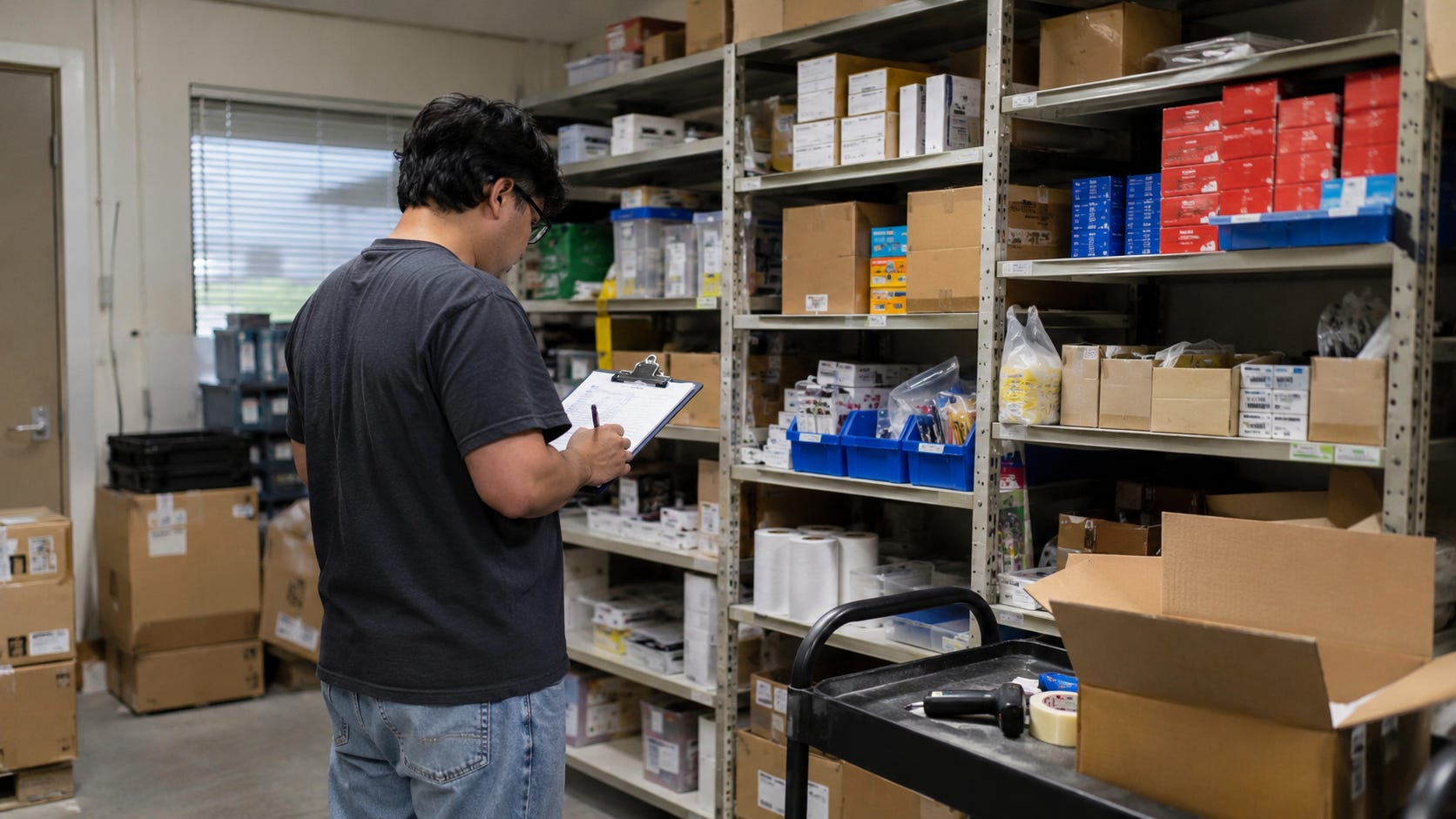
In our revenue example, a useful safeguard might independently reconstruct the sales total from the original order records, rather than begin with the AI-generated report. Another check could deliberately examine transactions whose classification is ambiguous or consequential.
An organization could even introduce known mistakes into test reports before deploying the workflow, allowing it to evaluate whether the proposed safeguards actually recognize the errors they’re supposed to catch.
I find this approach more meaningful than simply adding layers of review, although it also raises practical questions about cost, speed, and how much verification is reasonable. We shouldn’t pretend that every decision warrants exhaustive investigation or that human involvement automatically makes a process safer. Excessive review can become expensive, inefficient, and potentially another source of mistakes.
But there is an important distinction between a process that has been designed to detect consequential errors and one that has primarily been designed to demonstrate that every required step was completed.
An audit trail can tell us who approved a report, which systems participated, and whether the proper sequence of reviews occurred. That’s useful information, but it doesn’t necessarily reveal whether anyone independently tested the assumption on which the report depended.
I can imagine an organization becoming remarkably sophisticated at documenting every stage of its decision-making process while gradually losing the ability to recognize when the work itself is wrong.
And perhaps that’s where this becomes more than a question about software.
When the executive in our hypothetical company receives the finished revenue report, the relevant issue isn’t merely whether the document passed through the appropriate approval process. It’s whether the organization had a realistic way to discover the mistaken classification, and whether anyone actually performed that check.
The distinction sounds straightforward, but applying it becomes more difficult as the people responsible for supervision grow increasingly dependent on systems whose underlying work they may not be able to reproduce.
Which leaves me wondering how much someone needs to understand about a task to supervise it competently, especially when the system doing the work may be far more capable at performing it than the person responsible for deciding whether it’s correct.
References
Lyell D, Coiera E. Automation bias and verification complexity: a systematic review. Journal of the American Medical Informatics Association. 2017;24(2):423–431. https://doi.org/10.1093/jamia/ocw105
Kim EM, Garg A, Peng K, Garg N. Correlated Errors in Large Language Models. Proceedings of the 42nd International Conference on Machine Learning. Proceedings of Machine Learning Research. 2025;267:30038–30066. https://proceedings.mlr.press/v267/kim25e.html
Vaccaro M, Almaatouq A, Malone T. When combinations of humans and AI are useful: a systematic review and meta-analysis. Nature Human Behaviour. 2024;8:2293–2303. https://doi.org/10.1038/s41562-024-02024-1
Where this conversation goes next
This began with something I’ve been finding increasingly strange about our relationship with AI. We’re learning how to work with intelligent machines, how to supervise them, how to manage people who rely on them, and now, increasingly, how to evaluate machines that are evaluating other machines.
It’s a remarkable amount of change to absorb, especially when the technology itself keeps changing while we’re figuring it out.
The more I’ve thought about it, the more I’ve realized that these questions extend well beyond technology. They touch on how we define competence, what we expect people to understand, and what it means to be responsible for decisions we may no longer make entirely ourselves.
So I’ve organized these thoughts into a short-ish three-part series, The Strange New Job of Being Human.
This first essay, Who Is Supervising Whom?, explores what meaningful oversight actually looks like when people and machines increasingly evaluate one another.
In Part II, What Counts as Knowing How?, I’ll explore a question with implications for education, employment, and expertise: if AI helps us accomplish things we couldn’t do independently, what does that say about what we actually know?
And in Part III, When the Machine Knows Better, things get even more uncomfortable. What happens when a capable person disagrees with an AI system that may have stronger evidence? When should we trust our own judgment, and when should the machine’s answer make us question it?
I’m not approaching these questions convinced that humans must always remain in control, or that greater automation necessarily means progress. I’m interested in finding out where those assumptions hold up, and where they don’t.
I suspect we’re going to need some new ways of thinking about all of this. And I’d especially love to hear where you’re encountering these tensions in your own work or life. Frankly, I think some of the most interesting parts of this conversation will happen in the comments!
A little more from me
Much of my professional life these days involves thinking about how people interpret evidence, make decisions under uncertainty, and distinguish what we know from what we merely assume. AI has added some fascinating new dimensions to those old problems.
I’ve also been experimenting with ways to use AI to build tools for patients, medical professionals, and anyone curious enough to dig into the research.
One of these projects involves a growing collection of more than 128,000 cannabis-related scientific publications. Others focus on making complicated research understandable in plain English, organizing relevant news, and even making sense of what people are discussing, questioning, and arguing about in online forums.
There’s something wonderfully strange about using AI to build tools that help us understand information, while simultaneously trying to figure out how much we should trust the tools themselves. That’s part of what inspired this series.
If these sorts of questions interest you, I hope you’ll join me for the next two essays. And please, bring your own experiences, disagreements, and questions along.
Good questions deserve more than convincing answers.